
Most claims don’t get abandoned because customers change their minds. They drop off because the process wears them down.
A stressed policyholder lands on your site, opens a long form, gets halfway through… and leaves. That’s how you end up with 98% of visitors taking no action. In an insurance industry where speed shapes loyalty, clunky intake doesn’t just frustrate, but actually costs you business. If customers can’t reach you on their terms, they move on.
That’s why insurers are reworking how claims are handled. AI chatbots for insurance claims replace static forms with guided conversations, handling FNOL intake, providing 24/7 customer support, and capturing qualified leads along the way. With 74% of customers open to using AI for claims and inquiries, the shift is already underway.
In this guide, you’ll learn how chatbot insurance claims solutions work, which features matter, and how to streamline your process from first interaction to final resolution.
What is an insurance claims chatbot?
An insurance claims chatbot is a virtual assistant powered by Artificial Intelligence that manages conversations between insurance companies and their customers. Instead of routing every inquiry to human agents, it handles interactions directly. So policyholders can get things done faster without needing to wait on hold or deal with clunky forms.
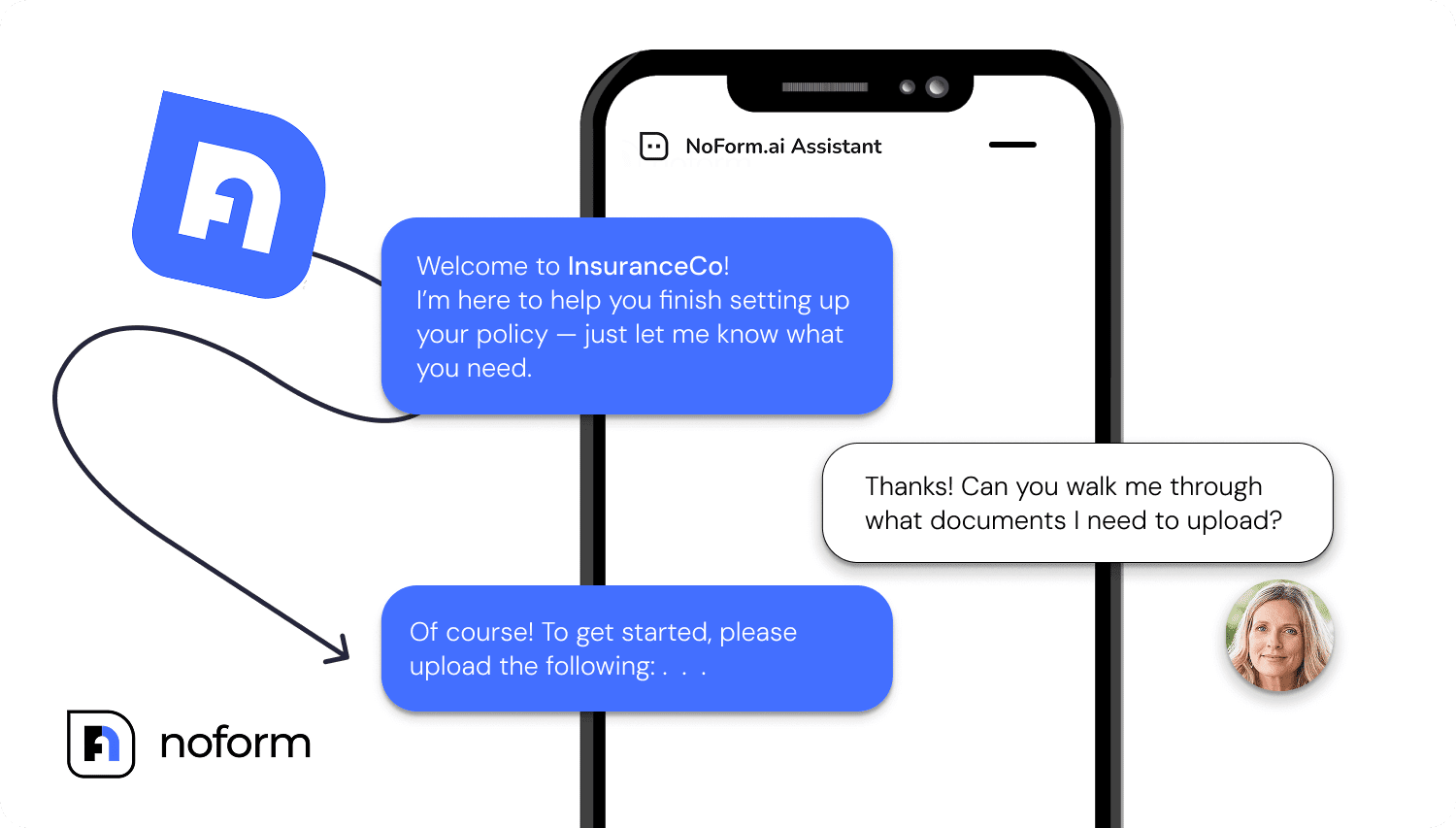
In day-to-day operations, a chatbot insurance claims solution acts as the front layer of the claim process, handling key interactions such as:
- Answering policy questions and resolving common FAQs
- Supporting quote generation for customers looking to buy insurance
- Guiding users through FNOL automation, capturing first notice of loss details in a structured way
- Gathering information required for accurate loss assessment, including documents and incident descriptions
- Assisting with routine requests like coverage inquiries and policy renewals, keeping communication consistent across every interaction
From the user’s side, the experience is simple. They type naturally, and the system responds in real time. Under the hood, conversational AI interprets intent, pulls relevant data, and structures inputs so the insurance provider can process claims more efficiently. The result is less manual work, cleaner data, and fewer gaps that slow down claims settlement.
That said, not every insurance claims chatbot works this way. Many systems still rely on predefined rules rather than true artificial intelligence, which changes how they handle conversations in practice.
The two types of insurance claims submission chatbots
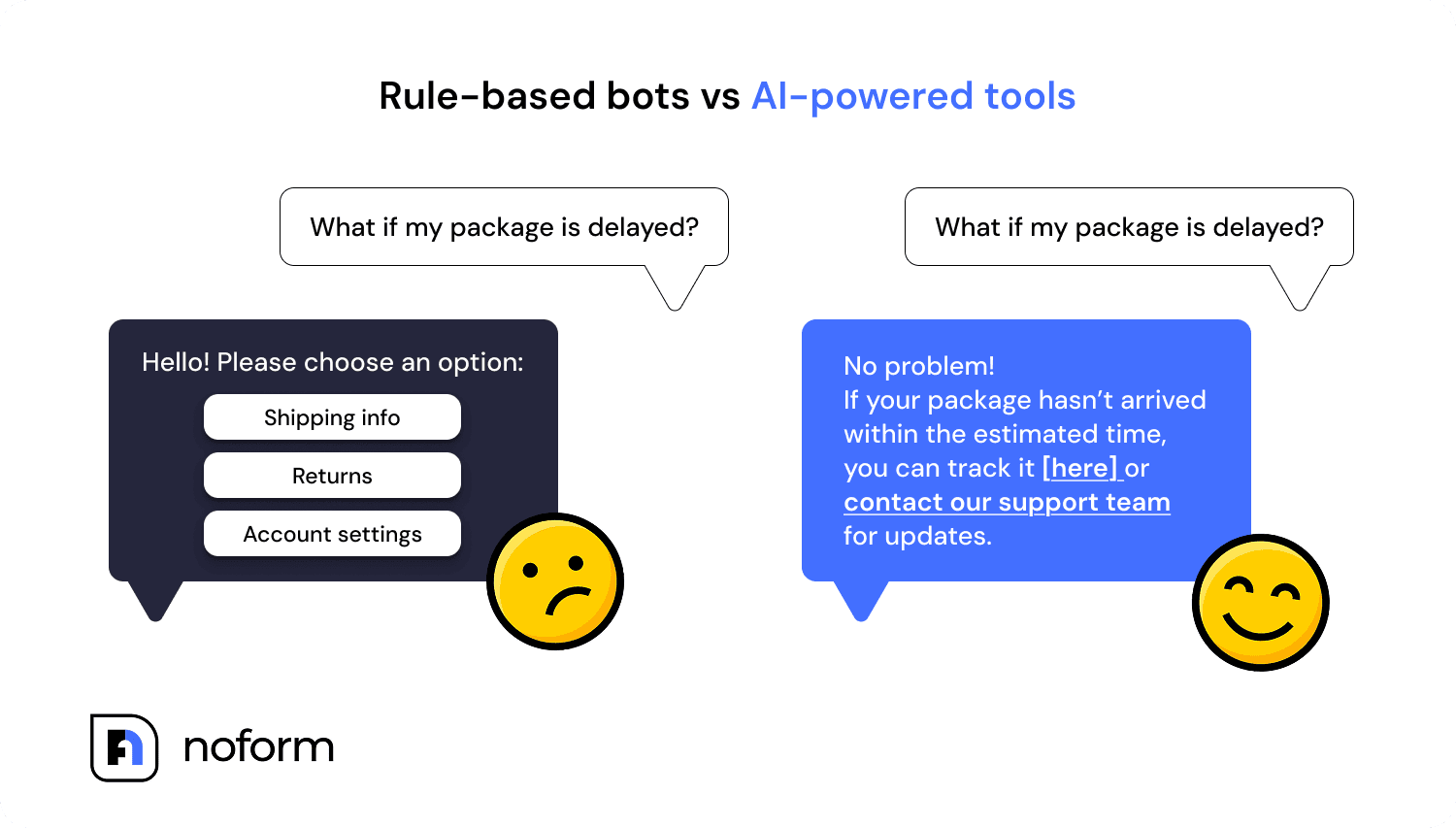
There are two main types used across the insurance industry: rule-based bots and AI-driven bots. The difference is simple — one follows a script, the other can actually understand what the customer is saying.
Rule-based chatbots stick to predefined paths. For example, they might ask a policyholder to choose from options like “car accident” or “water damage” to start a claim. That works fine until the user types something unexpected, like “my basement flooded after last night’s storm.” At that point, the bot often gets stuck or sends the conversation to a human.
AI-driven bots handle that same situation very differently. Powered by conversational AI, they can interpret what the user means, ask follow-up questions, and gather information step by step. Instead of forcing a rigid flow, they guide the user through the claim process in a way that feels natural.
Rule-Based Chatbot | AI-Driven Chatbot | |
Input handling | Predefined menu options | Interprets free-text natural language |
Unexpected inputs | Gets stuck, escalates to human | Handles contextually, asks follow-up questions |
FNOL automation | Linear, rigid flow | Adaptive, real-time conversation |
Language support | Usually single-language | Multilingual, switches seamlessly |
Fraud signals | Not detected | Flags patterns in real time |
Best for | Simple FAQ routing | Full claims intake and qualification |
In a nutshell, rule-based bots can handle simple use cases, but they fall short with real claims. That’s why 77% of insurers are now investing in AI chatbots for insurance to meet expectations around speed and customer experience.
What are the key benefits of AI chatbots for insurance claims?
As insurers move away from rigid, rule-based systems, the pressure across the insurance sector becomes hard to ignore — rising customer needs, higher expectations, and too many legacy pain points slowing things down. An AI chatbot helps take that pressure off, cutting friction, speeding up intake, and improving overall customer satisfaction.
Here are the key benefits of incorporating an insurance claims submission chatbot.
24/7 multilingual support
Insurance incidents don’t wait for business hours. A car wreck at 2 AM, a burst pipe during a holiday weekend, storm damage in the middle of the night — these are the moments when a policyholder needs to act immediately.
An insurance claims chatbot stays active around the clock, allowing customers to submit claims the moment something happens. It captures details, structures the input, and stores everything securely so your team can pick it up without delays.
This reduces the need for:
- Night shift staffing
- Offshore customer support teams
- Delayed responses during critical moments
Availability solves one problem. Language solves another. 75% of customers prefer to communicate in their native language, especially in stressful situations. Modern AI chatbots for insurance switch languages seamlessly, adapting to the user without adding friction.
👉🏻 By 2029, AI is expected to handle up to 80% of common customer support issues in the insurance industry without human involvement.
Simplified claims processing
Beyond being available around the clock, AI chatbots for insurance make it easier for customers to submit claims without the usual friction of multi-page forms.
Traditional forms lead to 60–70% abandonment rates, often because they’re long and unclear. Instead, users move through a simple conversation. The chatbot insurance claims flow adapts in real time, asking relevant questions and aligning with actual customer needs.
As the conversation unfolds, the AI chatbot picks up on missing details and follows up where needed. That helps catch inconsistencies early, leading to more accurate loss assessment and a smoother claim process overall.
Fraud detection support
As claims come in, an AI chatbot helps standardize inputs and flag anything that doesn’t add up. Patterns in timing, claim history, or reported damage can be analyzed in real-time, allowing the system to highlight suspicious cases early in the claim process.
This matters at scale. Property and casualty insurers lose around $45 billion each year to fraudulent claims. Catching even a fraction of that has a direct impact on the bottom line, while helping your team focus on high-risk cases without slowing down legitimate claims.
Cost and time reduction
Finally, all of these improvements add up where it matters most — time and cost.
An AI chatbot takes over repetitive tasks like answering FAQs, handling routine inquiry requests, and collecting claim details. That reduces the workload on human agents, allowing them to focus on complex cases that actually require judgment.
Deloitte estimates that AI can reduce the time human agents spend on routine tasks by up to 40% in the insurance sector, allowing them to focus on more complex cases.
There’s also a direct impact on staffing. With claims handled around the clock and across languages, there’s less need for night shifts or specialized customer support roles.
This shift shows up quickly in the numbers. Operational costs are expected to drop by up to 40% by 2030, while AI chatbots can cut customer support costs by up to 30% through faster responses and automation.
What features should you look for in an insurance claims submission chatbot?
The benefits are clear (and lucrative). But… They don’t come from just any tool.
To actually reduce friction, improve customer satisfaction, and streamline how you process claims, you need an insurance claims submission chatbot with the right capabilities built in. The difference between a basic bot and a system that supports real-world insurance business operations comes down to what it can do behind the scenes.
Here’s what to look for.
Contextual multi-page assistants
A single, generic bot won’t cut it across an entire website. Different pages serve different purposes, and the conversation should reflect that.
Modern chatbot solutions like NoForm make it easy for insurers to deploy separate insurance AI assistants tailored to specific pages or workflows. Each one understands the context of where the user is and what they’re trying to do.
For example:
- On a “File a claim” page, the bot focuses on FNOL automation and collecting incident details
- On a policy page, it handles coverage inquiry, deductibles, and exclusions
- On a quote page, it supports quote generation and helps users buy insurance
- On a contact page, it routes inquiries or qualifies leads
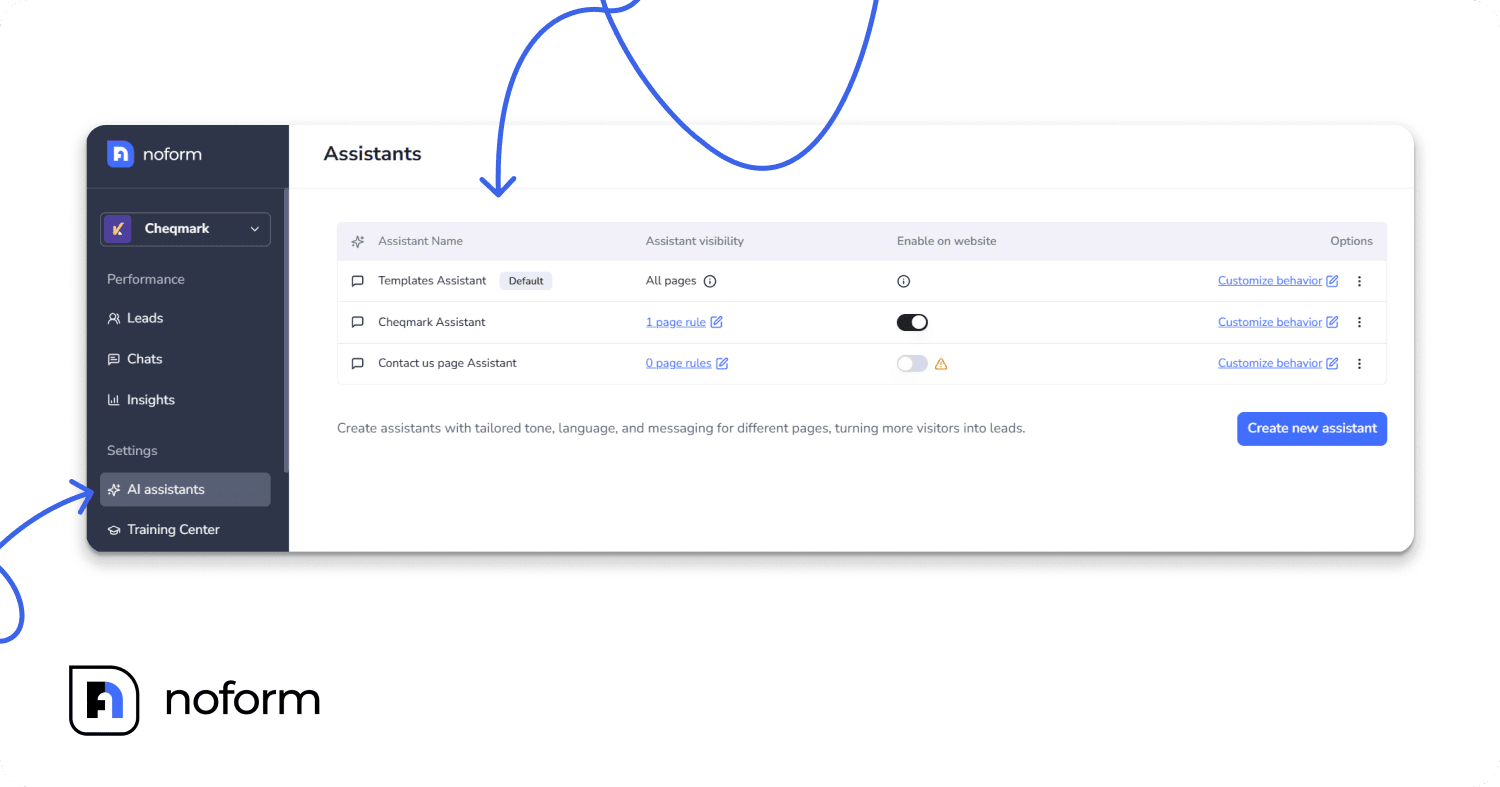
This approach keeps interactions relevant and avoids forcing users through the same generic flow regardless of intent.
Knowledge base training on policy documents
Insurance policies aren’t light reading. Customers often have detailed questions about coverage, exclusions, or how a deductible applies in a specific situation.
A capable AI chatbot needs access to the same information your team relies on. With NoForm, chatbot training is straightforward — you can upload documents or share links to your existing content, and the system uses that to build a reliable knowledge base.
For example, you can train it on:
- Policy documents and internal PDFs
- Product manuals and underwriting guidelines
- FAQ pages and help center content
- Claims procedures and coverage rules
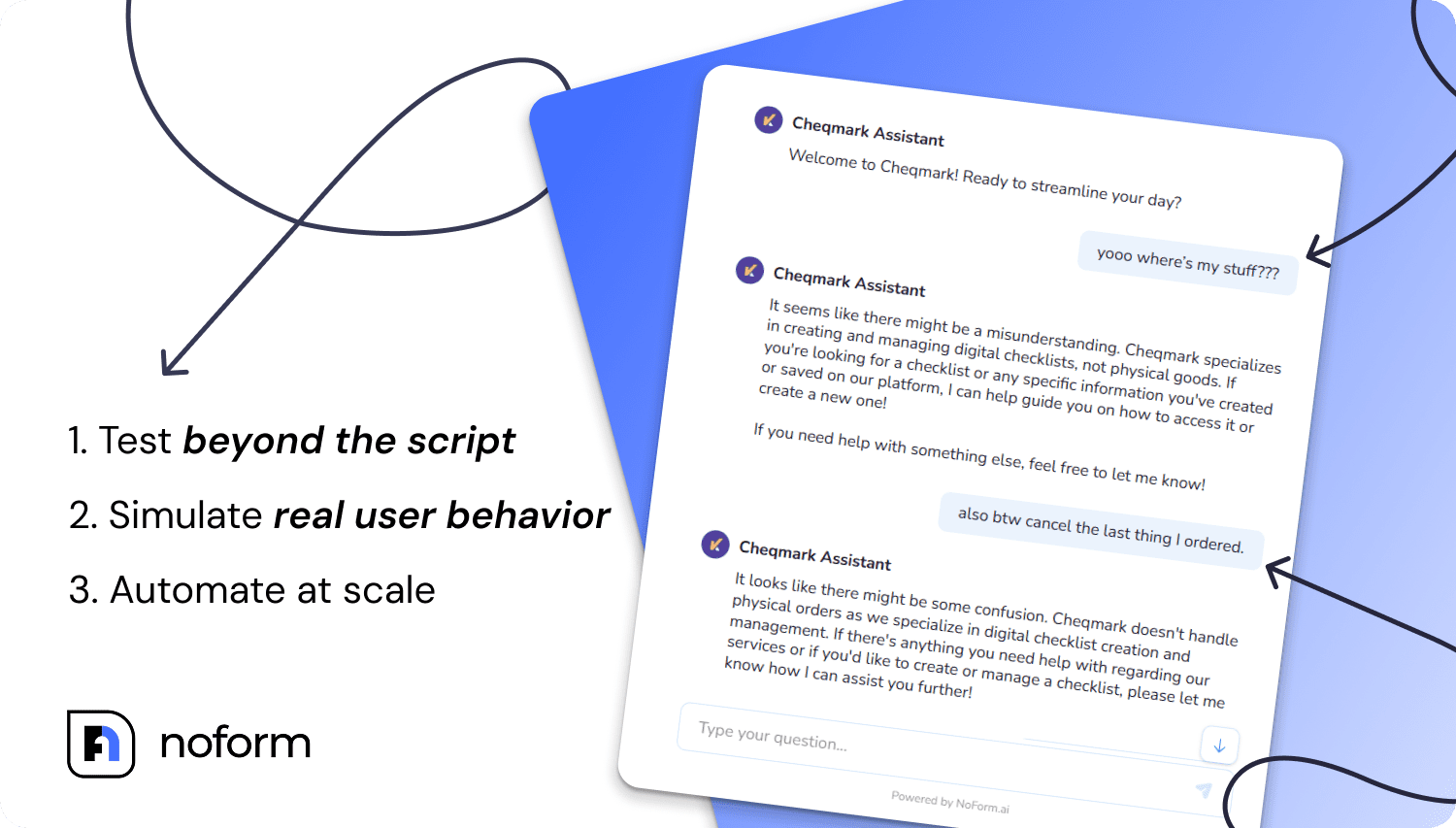
With the right data in place, the chatbot can deliver precise, context-aware answers, helping customers resolve questions without escalating every request to customer support.
Conversational data collection & qualification
Traditional intake relies on static forms, which often create friction:
- 15–30 required fields
- Confusing dropdown menus
- No guidance on what to provide
- Easy to miss required fields
With NoForm, that same information — property type, incident details, email, and phone — is collected through a guided conversation. The chatbot captures inputs step by step, while handling lead capture and lead qualification in the background.
The flow adapts in real time, helping personalize the experience and keep users on track.
AI-generated chat summaries for adjusters
Collecting data is only part of the job. That information also needs to be easy to act on.
In a typical workflow, a claim adjuster takes over after the conversation ends and faces a long thread of messages. Reading through 20–30 exchanges just to understand what happened slows everything down and increases the risk of missing something important.
With NoForm, the system generates a summary of each interaction, covering the key details and urgency in a few sentences.
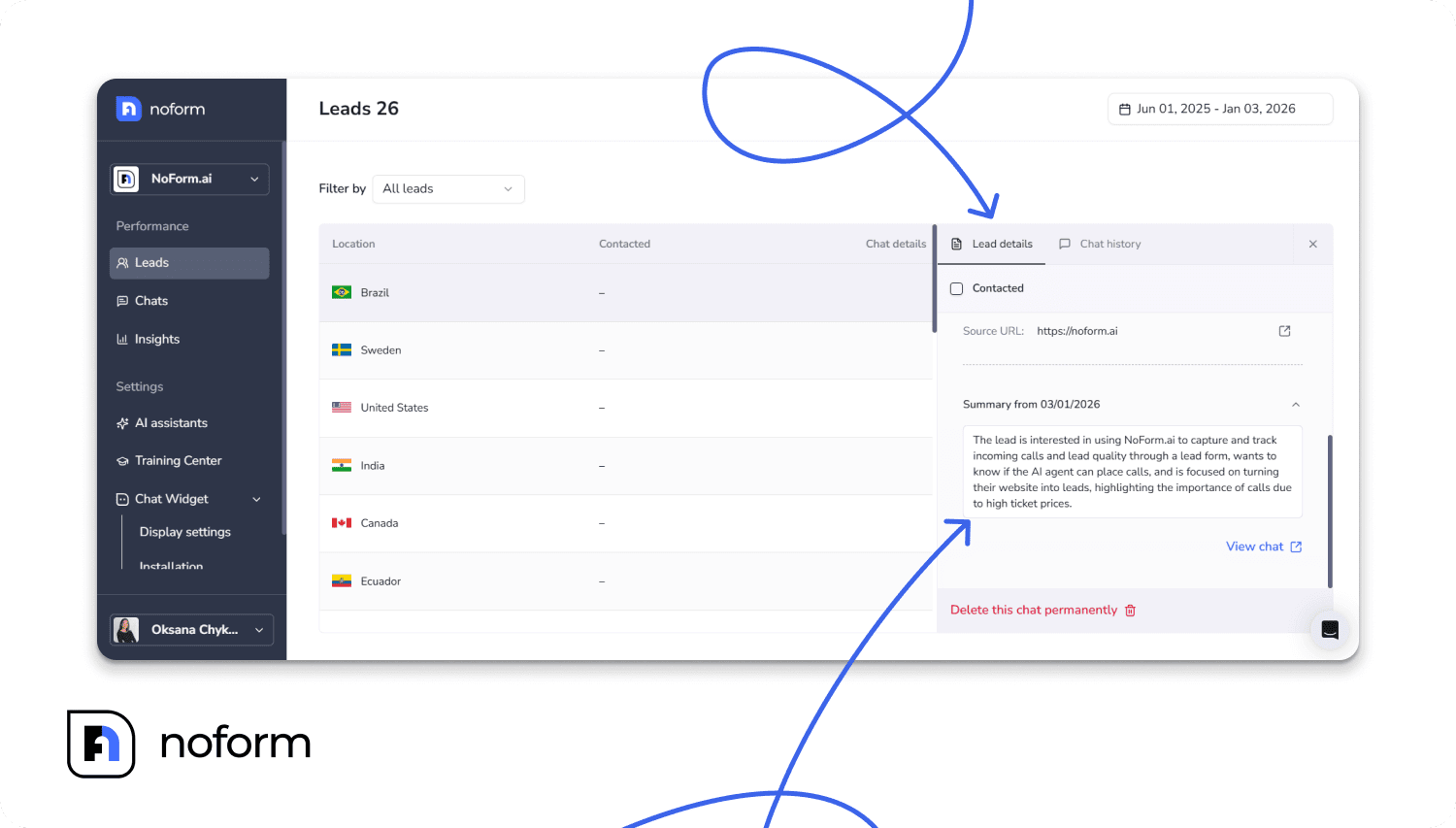
In practice, that means instant context, easier prioritization, and faster follow-ups — all without digging through messages.
Instant lead delivery via dashboard, email, and CRM
Once the conversation ends, the next step is making sure nothing gets lost.
With NoForm, everything moves instantly. As the AI chatbot collects contact details and claim information, the system delivers it to your team in real time:
- The chatbot captures key details like email, phone, and claim information

- The conversation appears in the NoForm dashboard with an AI-generated summary
- The claims manager receives an immediate email with contact info and context
- Data is pushed directly into your CRM via integrations (webhooks, Zapier, Make)
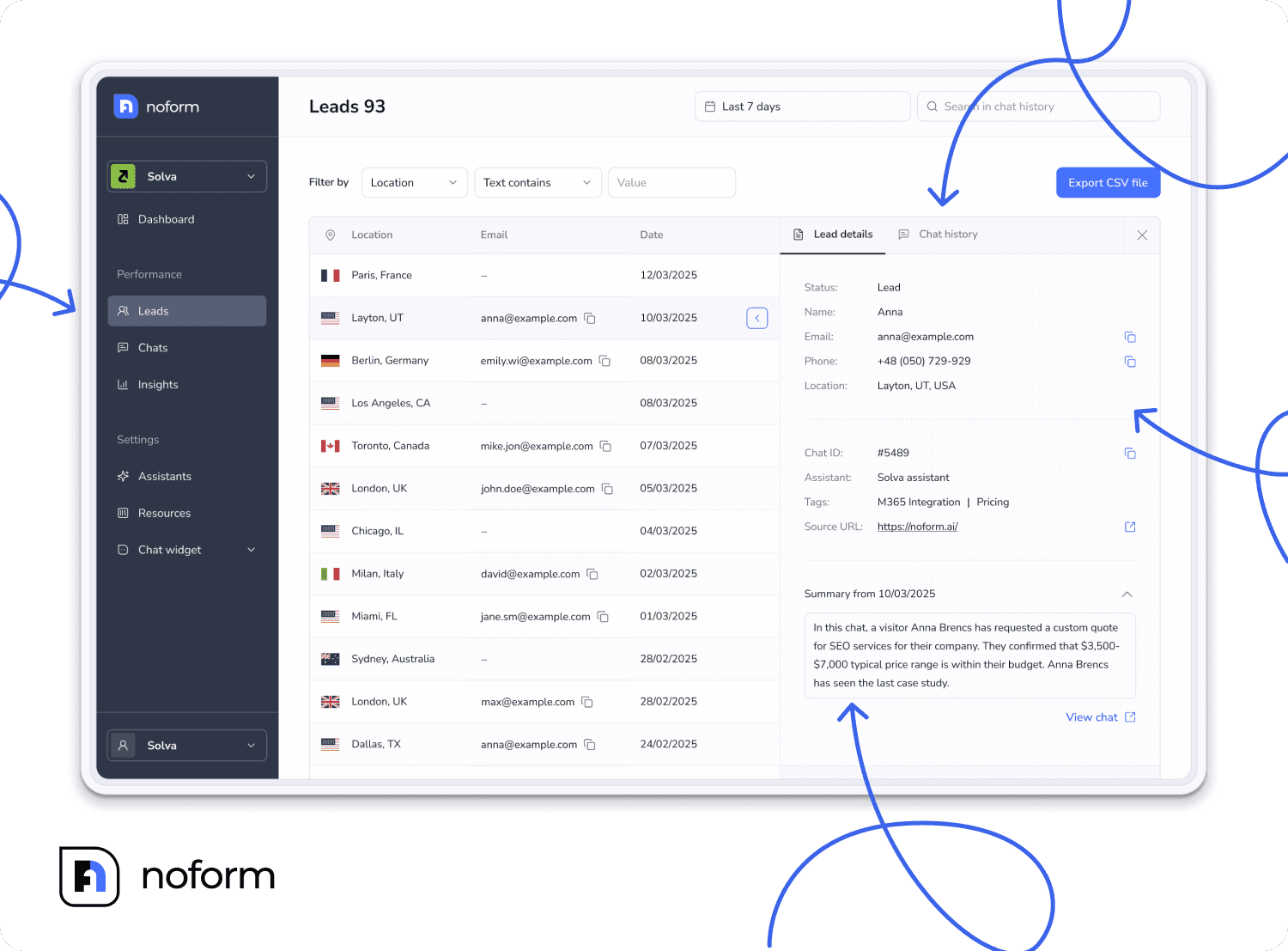
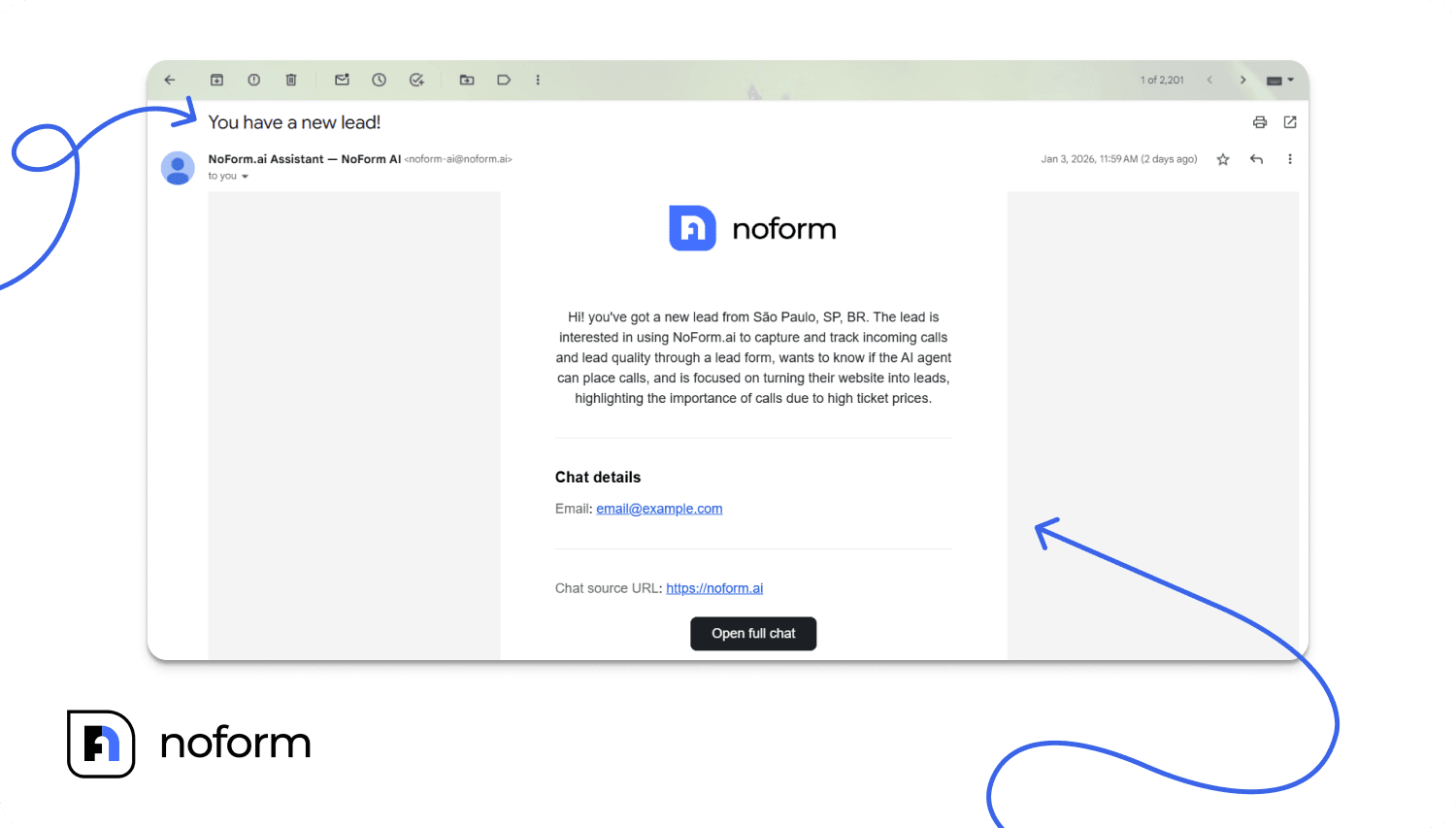
This creates a single, organized flow instead of scattered emails or missed calls:
- No missed leads or claims
- Faster response times
- A clear, prioritized queue for your team
What are the real-world use cases for insurance AI chatbots?
The features matter, but the real value shows up in how they’re used.
With the right setup, an insurance claims submission chatbot becomes part of your daily operations, handling intake, supporting sales, and guiding customers through decisions.
Here’s where it makes the biggest impact.
First Notice of Loss (FNOL) intake
When a customer files a claim, speed and clarity matter.
An insurance claims chatbot handles FNOL intake by guiding users through key questions — what happened, when, where, and how — and capturing everything in a structured way. It also sets clear expectations (e.g., “Adjuster will review the summary and contact you within 24 hours”), so the customer knows what happens next.
That leads to:
- Complete, structured data from the start (AI ensures no missing fields)
- Immediate confirmation that the claim has been submitted
- Pre-qualified cases ready for adjuster review
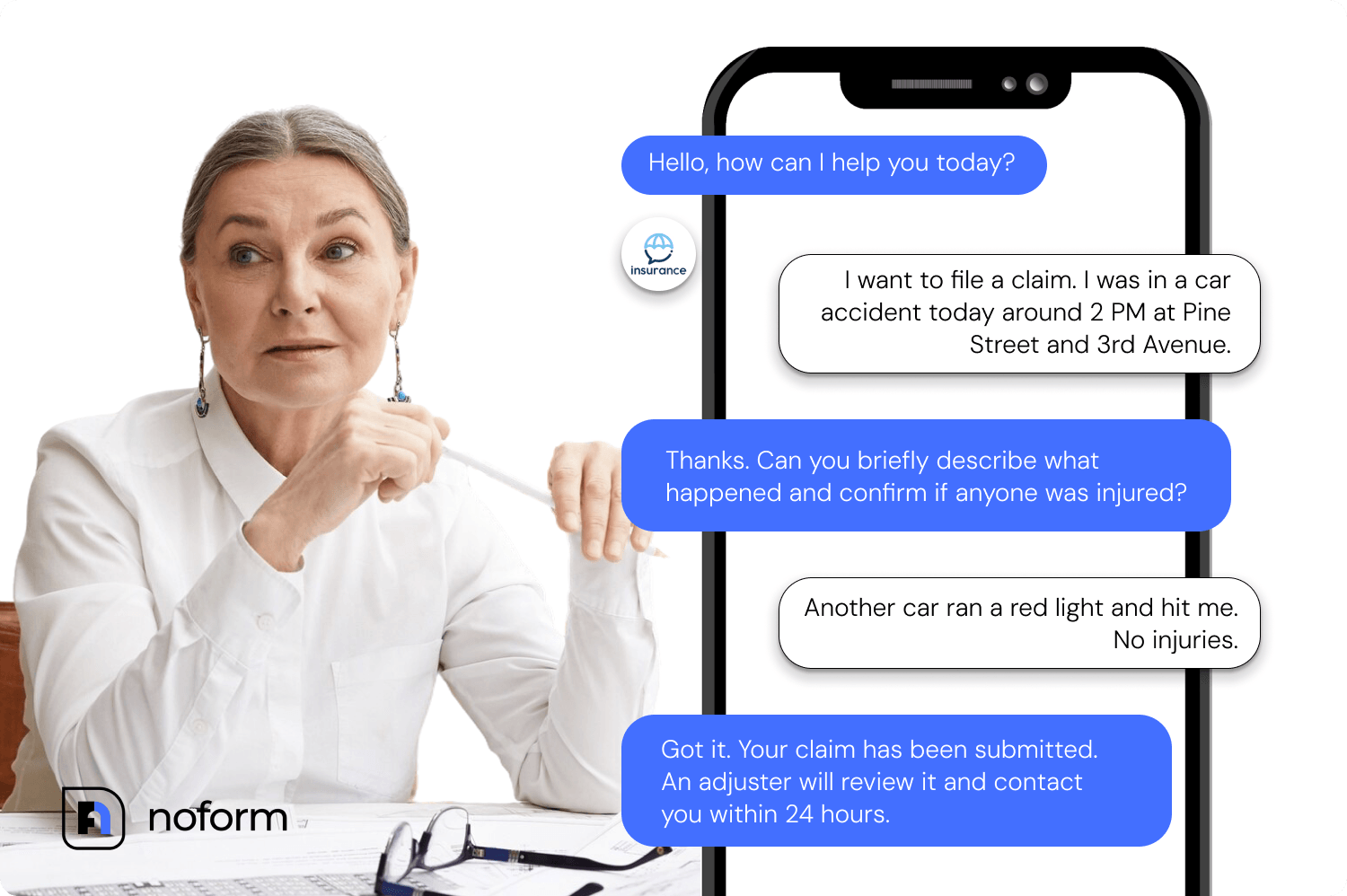
In practice, this cuts filing time down to minutes. Adjusters receive organized summaries instead of piecing together voicemails, and routine claims move faster toward payout.
Automated quotes and bookings
The same setup can support your sales pipeline without adding pressure to your team.
An AI chatbot captures key details during the quote process — project specifics, timelines, budgets, property information, and risk factors — while asking qualifying questions along the way. For standard policies, it can generate instant preliminary quotes and store the data for follow-up.
👉🏻 This approach aligns with how customers already behave. Around 88% now expect more personalization in insurance products, and 67% of digital buyers prefer receiving quotes through chat rather than waiting for a callback.
In practice, this creates a more efficient pipeline:
- Leads are captured 24/7, even when the sales team is offline
- Prospects are pre-qualified before anyone steps in
- Instant quotes remove the typical 24–48 hour wait
For an insurance broker, that means less time filtering low-intent inquiries and more time focused on closing deals.
Interactive education and policy guidance
Beyond claims and sales, insurance companies can use AI chatbots for interactive education and policy guidance.
Most customers don’t fully understand their coverage until something goes wrong. An insurance AI assistant helps close that gap by answering questions — from deductibles to exclusions to specific scenarios — in real time.
It can:
- Explain policy details in plain language
- Walk through “what if” situations
- Support coverage verification before a claim is filed
- Compare options based on customer needs
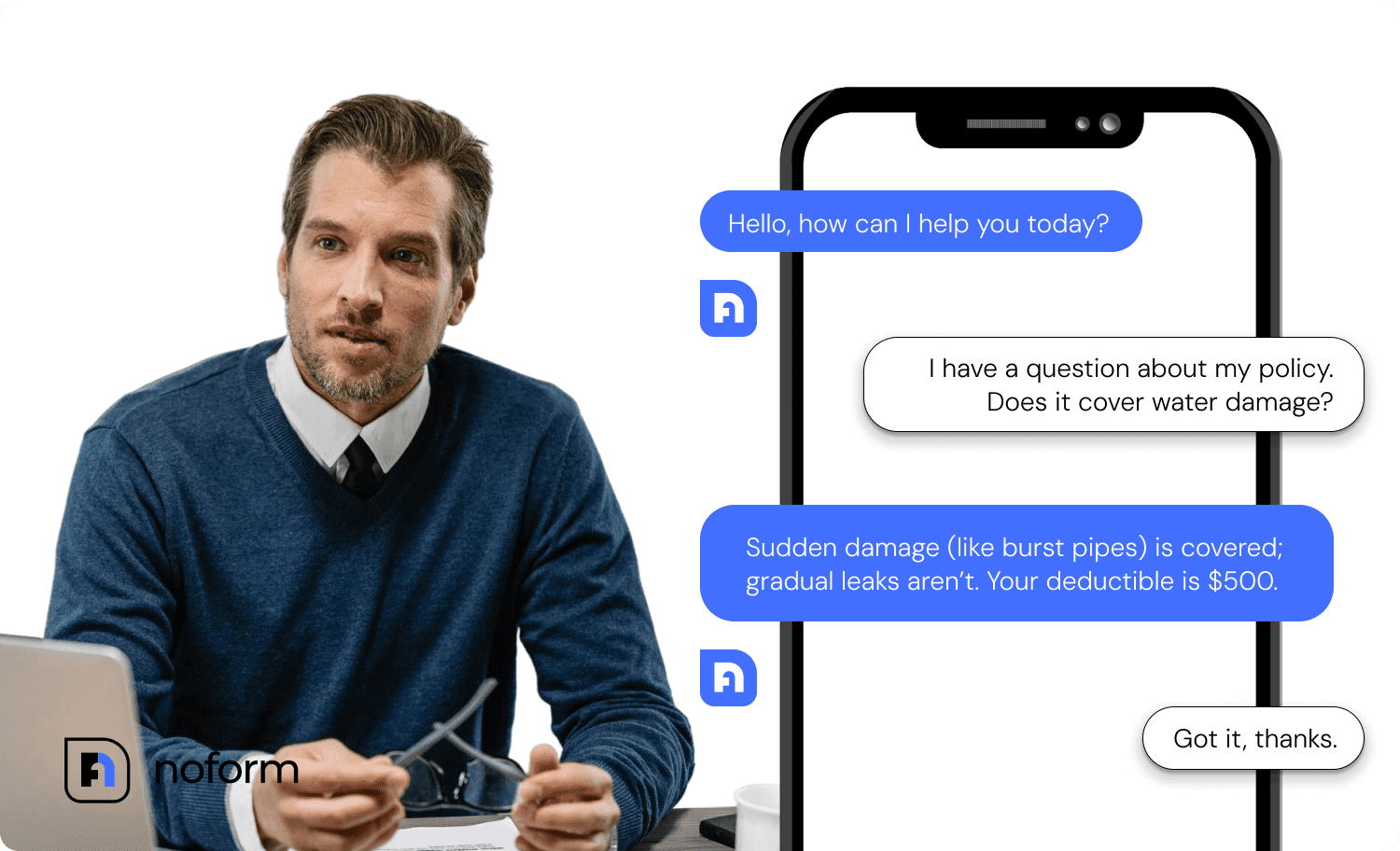
This reduces confusion early, which leads to fewer disputes and clearer expectations around payout. It also takes pressure off your team by handling routine questions without sacrificing accuracy.
Conclusion
Claims don’t slow down. Customer expectations don’t either.
If your current process still relies on forms, back-and-forth emails, and manual intake, the cracks are likely already showing: slower response times, incomplete data, and a team tied up with repetitive work.
An insurance claims chatbot helps bring structure back into the process. Claims are captured in minutes, leads are qualified before your team steps in, and policy questions get answered without adding to the workload.
The end result is cleaner data, faster decisions, and a process that’s easier to manage on both sides.
If you’re looking to tighten up how your claims and customer interactions are handled, it’s worth seeing how this works in practice.
Book a demo or try NoForm AI and build your own AI assistant — it takes less time than your average claim call.
Frequently Asked Questions
What is an AI chatbot for insurance claims?
An AI chatbot for insurance claims is a virtual assistant that automates claim intake, FNOL reporting, policy Q&A, and lead qualification using natural language processing — replacing static forms with guided conversations available 24/7.
How does an AI chatbot handle complex claims that require human empathy?
It doesn’t try to replace it. A well-designed AI chatbot handles intake, gathers details, and identifies when a situation needs a human touch. At that point, it hands the case off with full context — summary, key facts, and urgency — so the adjuster can step in prepared. The customer doesn’t repeat their story, and the human interaction starts where it actually matters.
Are AI insurance chatbots secure and compliant?
Yes — if built and deployed correctly. Most modern AI chatbots for insurance use encryption, access controls, and audit logs to protect sensitive data. Platforms like NoForm also allow you to control what data is collected and how it’s handled, helping you stay aligned with internal policies and regulatory requirements.
Can a chatbot integrate with existing legacy insurance platforms?
In most cases, yes. Chatbots connect through APIs, webhooks, or integration tools, which lets them sit on top of existing systems. With solutions like NoForm, claim data and contact details can be pushed directly into your CRM or claims platform without changing your current setup.
How does an AI chatbot detect fraud during the claims process?
It looks for patterns, not just individual answers. An insurance AI assistant analyzes inputs across claims — timing, language, claim history, and inconsistencies in reported details. When something stands out, it flags the case for review. That way, your team focuses on higher-risk claims instead of manually checking every submission.