Students expect answers now, not tomorrow—and universities feel the strain. Rising student expectations, nonstop inquiries, and stretched support teams make it harder to keep communication clear and timely.
That’s where AI chatbots for education step in.
The right chatbot for higher education can handle the rush, enhance student engagement, and bridge the widening gap between what students need and what staff can realistically deliver.
In this guide, we’ll break down how chatbots for universities work, where they create the biggest impact, and how to implement them effectively so your institution can support students at scale without burning out your team.
What are AI chatbots for universities?
Higher education chatbots are AI-driven assistants that help students, applicants, and staff get fast, accurate answers across university websites, web chat, and messaging channels.
A chatbot for university teams works like a digital front desk that never closes, enabling the digital transformation of higher education institutions. Using artificial intelligence, it understands questions, responds in plain language, and guides people to the right information without sending them through a maze of links.
How university chatbots work
The underlying AI technology (natural language processing, machine learning, and generative AI) stays behind the scenes. The workflow from a university’s perspective is simple:
- A student asks a question through a web chat widget embedded on the university website.
- The chatbot interprets the request, recognizing intent even when the wording varies.
- It searches institutional knowledge sources—including uploaded documents and website content—pulling from approved policies, program details, or other university information it’s been trained on.
- It replies with a clear, real-time answer, tailored to the context of the question.
- It captures conversation details, storing chat transcripts along with any contact information students provide in a dashboard where staff can review inquiries and follow up via email or phone as needed.
Key use cases for university chatbots
With the basics covered, it’s time to look at how higher education chatbots actually work inside a university’s day-to-day operations. Their value becomes clearer when you see them embedded in real processes rather than treated as abstract tech.
Below are the core use cases where chatbots offer meaningful impact, each shaping a different part of the staff and student experience.
Admissions and enrollment automation
The admissions cycle is one of the busiest periods for any institution. A constant flow of student inquiries can slow teams down, and applicants often need rapid answers to keep their application process moving. This is why universities use chatbots to simplify early-stage communication and keep prospective students on track.

What AI chatbots for education institutions can automate in admissions:
- Program-specific Q&A: Requirements, deadlines, scholarship rules—served instantly and consistently.
- Step-by-step application guidance: Helps applicants understand what comes next and where to submit materials.
- Financial aid basics: Shares high-level scholarship and funding guidance for new applicants.
A university can create a dedicated “Admissions Assistant” inside NoForm AI and train it on program requirements, deadlines, and enrollment steps. The assistant can collect essential contact details, such as email and phone, and universities can add custom fields, such as program interest or preferred start term. This allows admissions teams to segment leads, tailor follow-ups, and automatically prioritize high-intent applicants.
Student support and service automation
Once students arrive, their questions shift to daily logistics. Academic calendars, schedules, campus services, and troubleshooting LMS issues—these topics generate a steady stream of requests. A reliable chatbot for higher education supports students around the clock and reduces ticket volume for frontline teams.
Tasks that can be automated:
- Academic calendars, exam schedules, registration troubleshooting: Students get clear, real-time guidance.
- Campus services information: Library hours, dining options, recreation access, IT support.
- Course registration support: Walks students through steps and helps resolve common blockers.
- Academic policy explanations: Credit transfers, appeals, probation details.
- Academic support referrals: Directs students to tutoring, writing centers, or other resources.
- Tier-1 helpdesk resolution: Handles routine questions before they become tickets.
The more aligned the chatbot is with student needs, the easier it becomes for staff to focus on higher-value academic support.
Financial aid and billing support
Financial aid offices deal with complicated, deadline-driven questions. Students often need repeated clarification, and small delays can affect enrollment or retention. Chatbots can also guide students through the maze of forms and timelines, so teams spend less time re-explaining the basics.
Support tasks a chatbot can automate:
- FAFSA and aid application help: High-level direction and reminders.
- Tuition payment explanations: Billing cycles, payment plans, and due dates.
- Scholarship details: Eligibility criteria and application timing.
Campus communication and event engagement
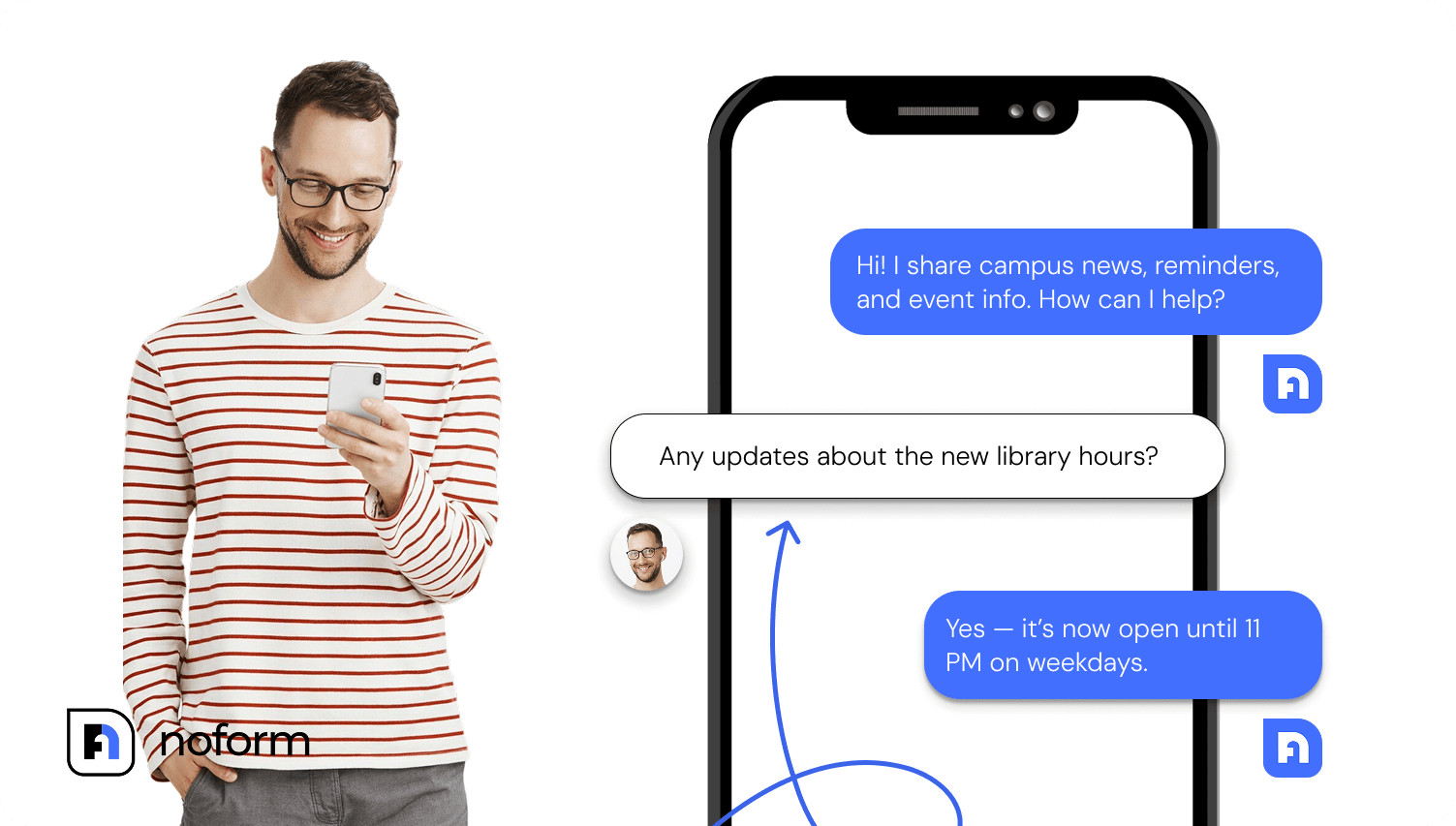
Universities run a constant stream of events, updates, and announcements. A university chatbot keeps the flow of information organized and immediately accessible, improving engagement and reducing the chance that important details get lost in crowded inboxes.
What chatbots streamline here:
- Event promotion: Orientation, open houses, webinars, virtual tours.
- Registration and RSVPs: Captures sign-ups and participant details.
- News and alerts: Shares key campus updates, policy changes, and reminders.
With NoForm AI, teams can add conversation starters for upcoming events, connect registration workflows via webhooks, and showcase the chatbot prominently on event-related pages.
Faculty support and workload reduction
Faculty inboxes fill quickly with administrative questions that don’t require instructional expertise. A chatbot higher education teams deploy can absorb this load, so instructors spend their time teaching rather than re-answering routine messages.
Automated tasks for faculty support:
- Course details: Syllabus basics, assignment deadlines, and attendance policies.
- Administrative questions: How to find materials, update passwords, or access systems.
- Resource guidance: Direct links to teaching tools or institutional policies.
Personalized learning assistance
Students often need quick academic clarifications, but don’t always know where to look. Chatbots provide personalized support in moments when students might otherwise give up or wait hours for help.
Examples of learning assistance virtual teaching assistants can offer:
- Study resource recommendations: Suggestions based on the student’s specific question.
- Concept explanations: Short clarifications of terms or ideas.
- Tutoring and office hour directions: Clear next steps to get deeper help.
This type of AI personalization strengthens the academic experience without replacing human instructors.
Lead qualification and marketing automation
On the marketing side, chatbots for universities are powerful tools for conversational marketing. They help identify visitors with genuine interest and encourage them to take the next step.
Marketing and recruitment tasks:
- Engaging program-page visitors: Answers detailed questions while they’re exploring.
- Identifying high-intent leads: Recognizes patterns in questions and behavior.
- Lead capture for follow-up: Collects contact details such as email and phone numbers, and universities can attach additional custom attributes, such as program interest or start date.
This ensures marketing teams spend their time on the prospects most likely to convert, with structured data that makes outreach faster and more effective.
Data and insights
Finally, beyond day-to-day automation, chatbots generate a steady flow of insights that help universities understand what people are actually asking for. This makes them a valuable source of student feedback and operational intelligence.
Insights universities can gather:
- Conversation patterns: Common questions and recurring pain points.
- Content gaps: Topics where resources are missing or unclear.
- Prospective student trends: Programs that attract more inquiries or concerns.
- Performance data: Engagement rates and lead quality.
These insights help institutions refine communication, policies, and digital services with real evidence rather than guesswork.
Benefits of AI chatbots for universities
With so many practical applications in daily operations, the best chatbots for higher education naturally deliver a wide range of benefits. When universities adopt thoughtful AI use, they gain faster service, stronger enrollment outcomes, and a smoother path to student success.
24/7 availability across all time zones
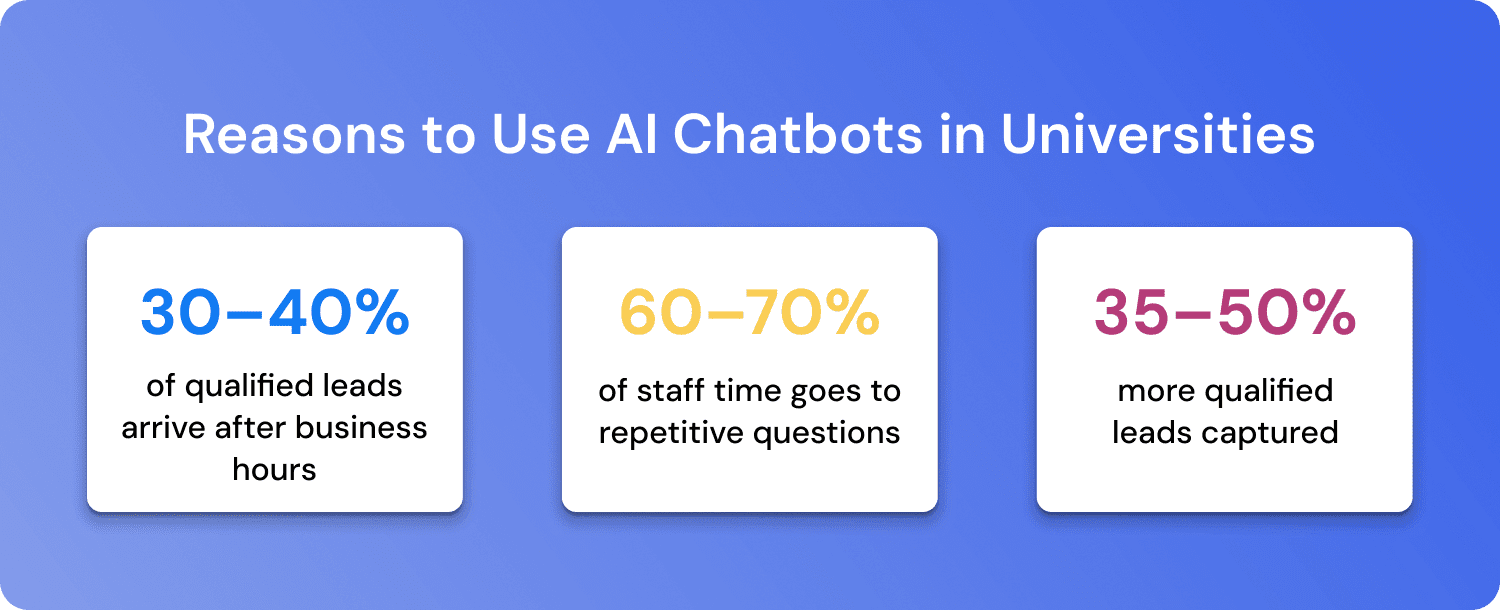
Students don’t limit their questions to office hours, and neither do prospects. In fact, 30–40% of qualified leads get captured outside business hours, which means delayed responses often translate into missed opportunities.
A university chatbot fills that gap by offering immediate help at any time, which is especially valuable for international students navigating different time zones.
Multilingual support powered by AI technology lets students get assistance in their preferred language, reducing confusion and increasing accessibility without additional staffing.
Higher operational efficiency
Admissions, registrar, and student services teams spend 60–70% of their day answering routine questions. Chatbots for universities handle these instantly, cutting ticket volume and allowing staff to focus on complex cases, strategy, and at-risk students.
Improved lead conversion and enrollment rates
Proactive chat engagement captures contact details the moment a prospective student shows interest. AI chatbots for education respond immediately, qualify visitors through intelligent conversation, and structure the data admissions teams need to follow up effectively.
Many institutions see a 35–50% increase in qualified lead capture when chatbots engage visitors in real-time. NoForm AI allows you to configure custom lead attributes—like program interest, start term, and student type—so your team receives pre-qualified, structured leads ready for enrollment conversations.
Better student experience and satisfaction
Instant, context-aware responses keep students moving without delays. With NoForm, universities can place dedicated AI assistants on admissions, financial aid, or support pages so each one matches the page’s purpose. This reduces application abandonment and ensures consistent, reliable information across all touchpoints.
Significant cost savings for institutions
Chatbots handle unlimited conversations simultaneously, allowing universities to support large volumes of student inquiries without seasonal staffing or overtime. Reduced call and email traffic leads to meaningful budget savings, which institutions can reinvest in higher-impact student-facing initiatives.
Data-driven insights for continuous improvement
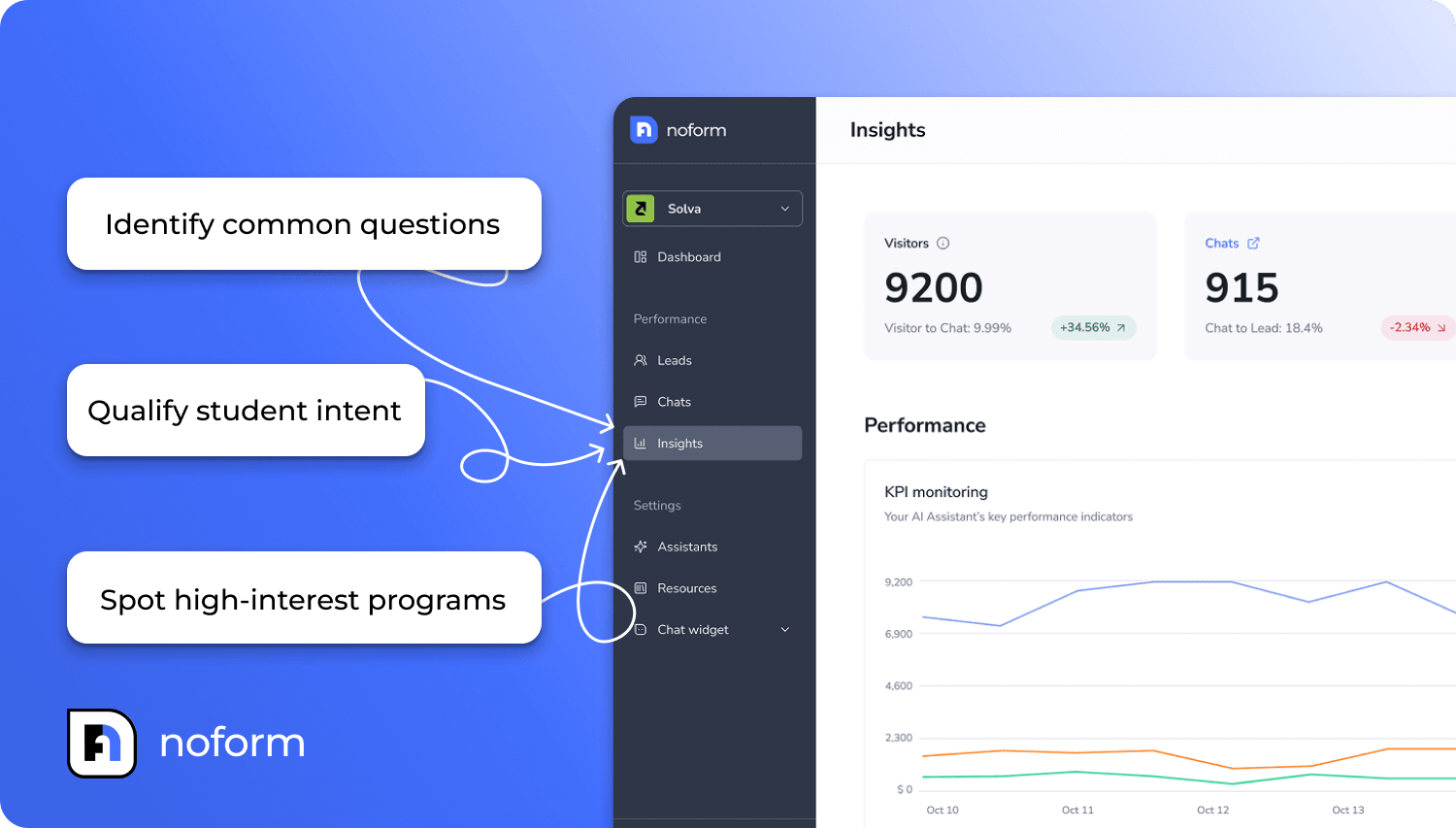
The use of AI makes it easy to see what students actually struggle with. AI chatbot conversation analytics reveal inquiry patterns, common pain points, and content gaps that traditional forms can’t capture. These insights help teams identify popular programs, refine communication, update website copy, and optimize marketing messaging based on real student questions.
Consistent, accurate information
When multiple staff members interpret policies differently, students end up receiving mixed or outdated answers. Higher education chatbots eliminate this inconsistency by acting as a centralized source of truth trained on official policies. Updates flow across all assistants instantly, reducing errors and strengthening institutional credibility.
Challenges and limitations of AI chatbots in higher education
Alongside the advantages, the use of chatbots in universities comes with limitations leaders should understand before committing to any AI solutions. A clear view of these challenges—and the fixes—helps institutions make confident decisions about adopting educational technology.
Knowledge limitations and accuracy concerns
Chatbots rely entirely on the information they’re trained on. If policies change or content becomes outdated, accuracy drops quickly.
To prevent this, universities should keep knowledge bases current, narrow each assistant’s scope, and retrain AI models regularly.
Complex or sensitive situations require human touch
Financial hardship cases, mental health concerns, grade appeals, and admission exceptions need human judgment. These scenarios shouldn’t be automated.
A reliable approach is to have the chatbot collect contact details for callbacks or route students to the right advisor so sensitive issues reach qualified staff without delays.
Potential for bias in AI responses
There’s always a risk of bias, especially in admissions or academic guidance, due to training data or algorithmic bias.
Regular audits, diverse datasets, and human oversight help maintain fairness and ensure responses align with institutional values and policies.
Integration complexity with legacy systems
Many universities still operate older Student Information Systems that don’t integrate easily with modern AI tools.
The simplest path is to start with a standalone chatbot focused on information delivery. Once that’s running smoothly, SIS or LMS connections can be added gradually through webhooks, Zapier, or Make.
Staff and faculty resistance to change
Concerns about job security, lack of technical comfort, and skepticism about AI effectiveness can create resistance to chatbot adoption.
Clear communication helps: chatbots are designed to support staff, not replace them. They handle repetitive, time-consuming tasks—like answering the same 20 FAQs daily—so staff and faculty can focus on meaningful work that requires their expertise. Demonstrating time savings and reduced administrative load usually builds support and eases the transition.
Best practices for implementing chatbots in higher education
To benefit fully from a university chatbot and avoid common pitfalls, it helps to follow a set of practical guidelines. These best practices give institutions a clear roadmap for deploying a chatbot platform that supports students, strengthens operations, and scales reliably.
Start with high-volume, high-impact areas
Begin where automation creates immediate relief and measurable results. Two areas consistently deliver early wins:
- Student services: Highest volume of repetitive questions (calendars, policies, campus logistics).
- Admissions and recruitment: Biggest revenue impact and strongest gains in lead conversion.
Starting in these departments allows you to refine workflows, measure improvements, and only then expand to financial aid, advising, or IT support.
Customize for your institution’s voice
Your chatbot should reflect how your university communicates. Whether the tone is formal, neutral, or conversational, consistency across touchpoints builds trust and differentiates your institution from competitors. A coherent voice also makes it easier to advise students in a way that feels familiar and reliable.
Configure thoughtful engagement strategies
Students engage more when the assistant guides them intentionally. Effective setups include:
- A clear welcome message: Explain what the assistant can help with right away.
- Conversation starters: Prompts like “Learn about our MBA program,” “Get application help,” “Schedule a campus visit” steer users toward key tasks.
- Contextual quick replies: Short, relevant buttons that reduce friction and keep conversations moving.

Train comprehensively on your content
A chatbot performs only as well as the information it’s trained on. Build a strong foundation by:
- Adding all essential web pages (admissions, financial aid, programs, policies).
- Uploading updated handbooks, policy documents, and academic guidelines.
- Including FAQ databases and past inquiries collected by staff.
- Scheduling regular reviews to update deadlines, program changes, and new requirements.
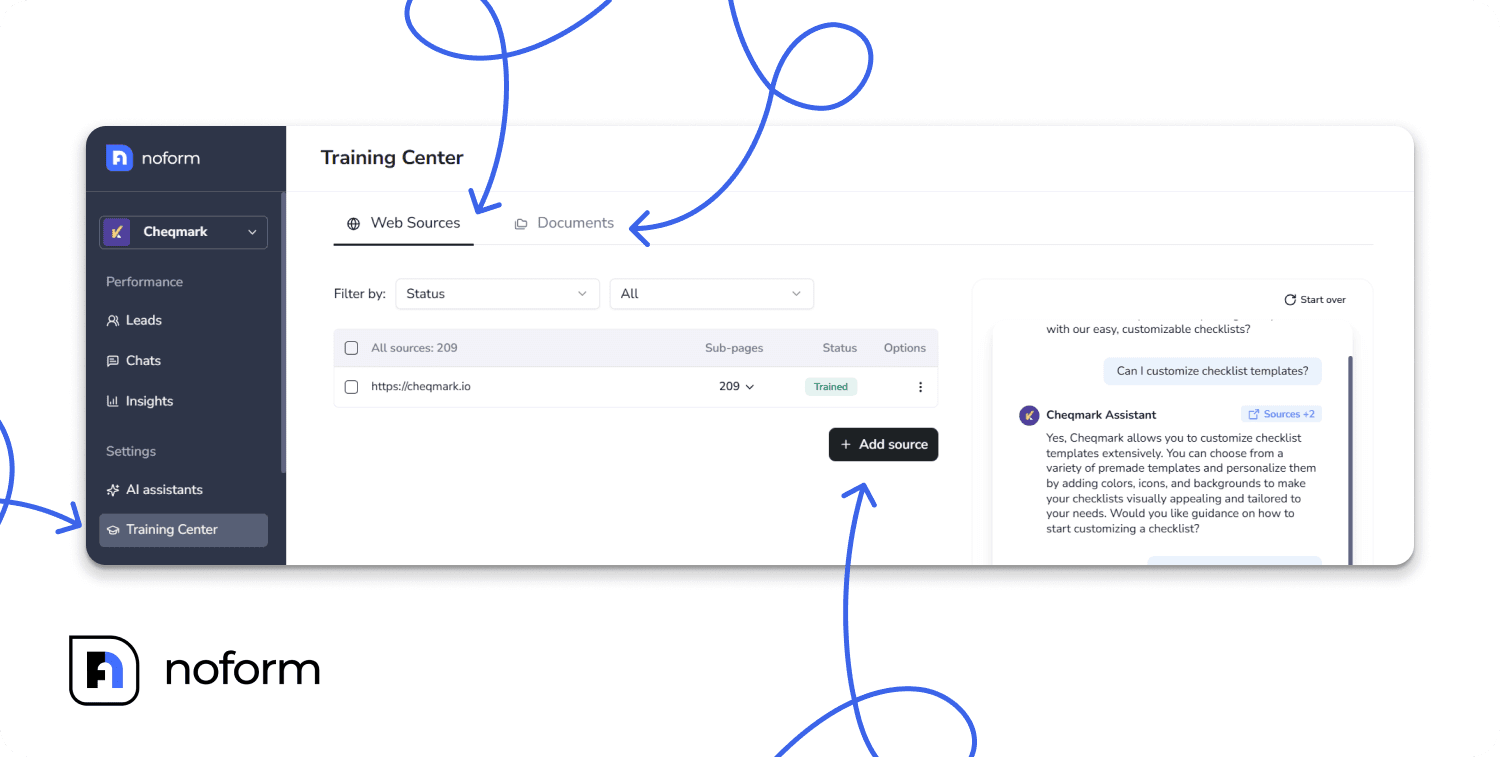
Learn more about chatbot training in our guide.
Define clear escalation protocols
Some questions require human judgment. Flag topics that should go to staff—financial issues, academic concerns, or urgent matters—and provide direct contact options. Ensure teams know how to handle chatbot-generated leads and follow up promptly.
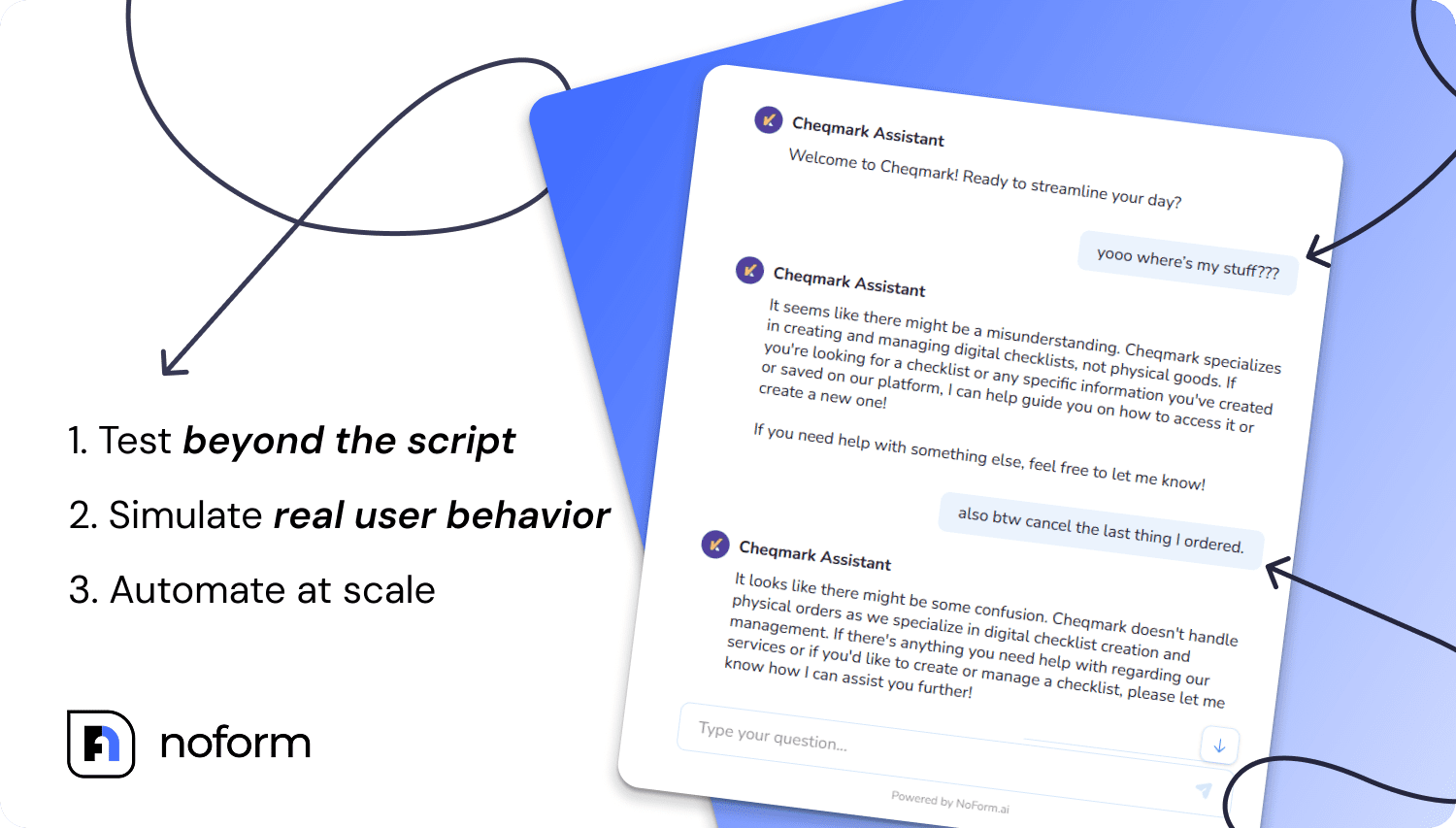
Test thoroughly before launch
Before going live, simulate real conversations across different devices and user groups. University chatbot testing helps confirm accuracy, tone, and usability so the assistant supports students effectively from day one.
Conclusion
AI chatbots give universities a direct way to improve accessibility, strengthen engagement, streamline high-volume tasks, and support healthier enrollment outcomes.
When implemented thoughtfully, they deliver instant answers, reduce staff workload, and provide consistent guidance across every stage of the student journey. Institutions adopting them now gain a clear operational advantage and a more responsive experience for students and prospects.
To explore what this could look like for your campus, book a demo call or try NoForm AI and build your first AI assistant.
AI chatbot for higher education FAQs
How do AI chatbots in higher education improve student learning?
They give students instant explanations, direct access to academic resources, and quick guidance when they’re stuck, helping them stay on track without waiting for office hours.
Are AI-powered chatbots replacing teachers in colleges and universities?
No. AI chatbots aren’t replacing teachers — they’re taking over repetitive, administrative tasks so faculty can focus on actual teaching and student support. Chatbots handle FAQs, deadlines, and basic guidance, while humans handle mentorship, instruction, and complex academic needs.
What are the best ways to test your chatbot in higher education?
Simulate real student and faculty conversations, test across devices, verify accuracy on policy-heavy topics, and review tone, routing, and escalation flows before launch.
Can chatbots support both students and faculty in higher education?
Yes. They answer student questions, assist with administrative tasks, and help faculty reduce repetitive communication so they can prioritize teaching.